We brought this out after dinner and somehow ended up talking for another two hours. The questions are simple, but they open up conversations we normally never have. It's become our go-to when we want to actually talk.
Emotions Check-In Cards (Ages 3–8)
A child who can name what they feel can begin to work with it. These forty cards give children between three and eight a simple, accessible way to identify and express what is happening inside them, before it overwhelms them. Feeling face cards. Body awareness prompts. Simple questions that help a child locate an emotion, name it, and understand where they feel it. Each card is designed to be used in under two minutes, in any setting, with no preparation. Used daily by parents, early childhood educators, school counsellors, and therapists as an emotional regulation tool. The conversations these cards begin are worth more than any curriculum resource.
WHAT'S INSIDE: 40 emotion identification and regulation cards | Body awareness prompts | Feeling face illustrations | Breathing cards
Reviews
AI Summary
Customers say these cards spark meaningful conversations that go beyond surface-level topics. Users report discovering new things about partners, family, and friends they thought they knew well. Many appreciate the thoughtfully crafted questions across different intensity levels, making them suitable for various settings—from date nights to team meetings. The cards are beautifully designed with quality materials. Common feedback highlights how they help couples reconnect, facilitate deeper communication, and create memorable moments together. Some mention the compact size makes them portable for various occasions.
We brought this out after dinner and somehow ended up talking for another two hours. The questions are simple, but they open up conversations we normally never have. It's become our go-to when we want to actually talk.
How to play
Put the cards on the table and take turns picking one. Read the question out loud and let everyone answer. Start with the easier cards, then move deeper as the conversation unfolds. There's no right way to play and no need to finish the deck.
Take your time, skip anything you're not ready for, and let one question lead to the next.
What Makes Emotions Check-In Cards (Ages 3–8) Different
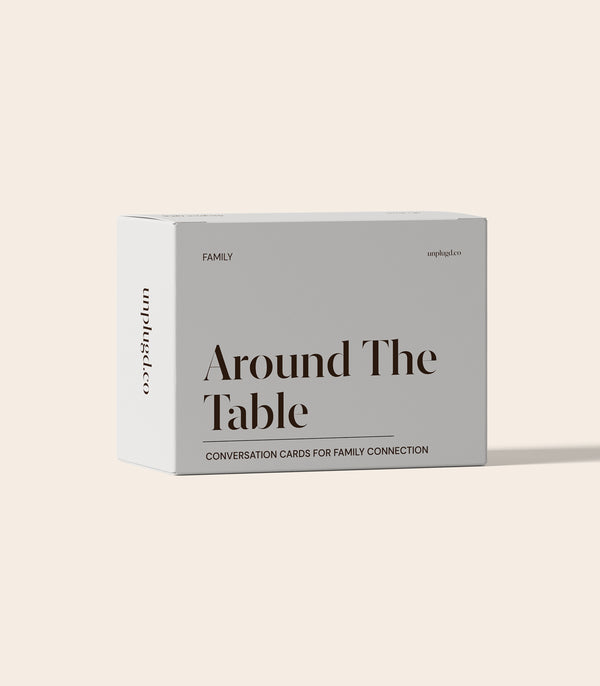
Most conversation games are built to keep the game going. Around the Table is built to keep the conversation going.
Every question is designed to feel natural, with three levels that let your family decide how deep to go. There are no points, winners, or complicated rules to get in the way. Just good questions, honest answers, and enough room for the conversation to become your own.
Why You'll Love It
It gives everyone a reason to put their phones down and be present. The questions make it easy to start talking, even when you don't know what to talk about. You'll laugh, learn something new about each other, and sometimes have the conversations you've been meaning to have for years.